Top 12 Best Samsung Phones
Competition makes for better products, and the Android ecosystem is
more competitive than ever. The range of steering Samsung phones has
just got more considerable, as the Samsung Galaxy S20, Galaxy S20 Plus,
Galaxy S20 Ultra, and Samsung Galaxy Z Flip have all been launched, and
some of them are now in our ranking.
The Samsung Galaxy Z Flip isn’t yet released, but that doesn’t mean
it won’t make our best Samsung phones list, we simply haven’t delivered
our final decision on it yet. The information provided for it now may be
amended later.
Even without Samsung Galaxy Z Flip, there are plenty of great Samsung
handsets to consider, with the latest addition being the Samsung Galaxy
S20 Ultra.
Samsung is also regularly innovating, with the likes of the
aforementioned Galaxy Z Flip, the original Samsung Galaxy Fold, and the
Samsung Galaxy S10 5G (which was one of the first 5G phones).
With so many phones available now and coming soon, choosing the right
one for you can be a daunting task, even if you round it down to just
the great ones.
That’s where we come in. Below you’ll find a list of the very best
smartphones Samsung has to offer, an accolade which ensures they rank
among the best phones from any manufacturer.
You’ll find specs, pros, cons, and a brief overview of each, so you
can see all the key things about them at a peek, making it easier to
compare them.
Best Samsung phones 2020 at a peek:
- Samsung Galaxy S20
- Samsung Galaxy S20 Plus
- Samsung Galaxy S20 Ultra
- Samsung Galaxy Note 10 Plus
- Samsung Galaxy Note 10
- Samsung Galaxy S10 Plus
- Samsung Galaxy S10
- Samsung Galaxy S10e
- Samsung Galaxy Fold
- Samsung Galaxy A80
- Samsung Galaxy A90 5G
- Samsung Galaxy Z Flip
1. Samsung Galaxy S20
The most one-hand-friendly version of Samsung’s flagship
Release date: March 2020 | Weight: 163g | Dimensions: 151.7 x 69.1 x
7.9mm | OS: Android 10 | Screen size: 6.2-inch | Resolution: 1440 x 3200
| CPU: Snapdragon 865 / Exynos 990 | RAM: 8GB/12GB | Storage: 128GB |
Battery: 4,000mAh | Rear camera: 12MP + 64MP + 12MP | Front camera: 10MP
While slightly less exciting than the Samsung Galaxy S20 Plus and S20
Ultra, the standard Galaxy S20 has a lower price going for it, as well
as a more pocket-friendly size.
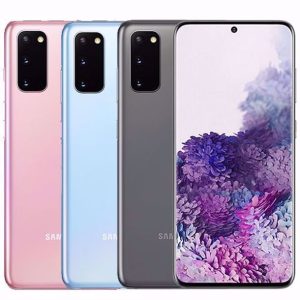
Though at 6.2 inches this is still far from a small phone, and with a
QHD+ resolution, a 120Hz refresh rate, and one of the best quality
AMOLED screens yet put on a phone, the display is worth shouting about.
The Samsung Galaxy S20 also has an impressive camera setup, headlined
by a 64MP telephoto sensor, which is joined by a 12MP main and 12MP
ultra-wide one – so it misses out only on the S20 Plus’s depth sensor.
The Samsung Galaxy S20 is also available in a 5G flavor, has a large
4,000mAh battery, and top-end power, thanks to either a Snapdragon 865
or Exynos 990 chipset (depending on where in the world you buy it).
2. Samsung Galaxy S20 Plus
The Samsung Galaxy S20 Plus is just right
Release date: March 2020 | Weight: 186g | Dimensions: 161.9 x 73.7 x
7.8mm | OS: Android 10 | Screen size: 6.7-inch | Resolution: 1440 x 3200
| CPU: Snapdragon 865 / Exynos 990 | RAM: 8GB/12GB | Storage:
128GB/256GB/512GB | Battery: 4,500mAh | Rear camera: 12MP + 64MP + 12MP +
ToF 3D | Front camera: 10MP
The Samsung Galaxy S20 Plus is an absolutely fantastic phone. The
design isn’t massively changed from the Galaxy S10 Plus, but most other
elements have been upgraded. The screen now has a silky-smooth 120Hz
refresh rate, it packs a more powerful chipset, and its cameras have had
a big boost.
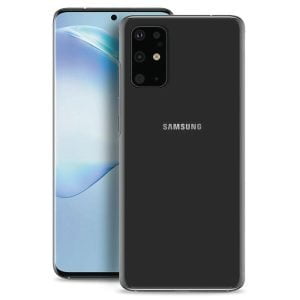
The most exciting lens is its 64MP telephoto one, facilitating a 3x
hybrid optical zoom, but there are also 12MP main and 12MP ultra-wide
ones, as well as a depth sensor.
Add in a massive 4,500mAh battery, 5G support, and all the things you
expect from a Samsung flagship, like water resistance and an in-screen
fingerprint scanner – and the Samsung Galaxy S20 Plus is clearly one of
the very best phones from any company, not just the South Korean giant.
3. Samsung Galaxy S20 Ultra
The ultimate flagship – at an ultimate price
Release date: March 2020 | Weight: 166g | Dimensions: 166.9 x 76 x
8.8mm | OS: Android 10 | Screen size: 6.9-inch | Resolution: 3200 x 1440
| CPU: Snapdragon 865 | RAM: 12/16GB | Storage: 128/512GB | Battery:
5,000mAh | Rear camera: 108MP + 48MP + 12MP + ToF 3D | Front camera:
40MP
If money were no object, then the Samsung Galaxy S20 Ultra would rank
higher on this list, as in many ways it’s the best Samsung phone you
can purchase.
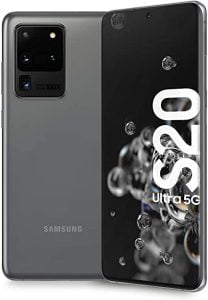
It has a massive 6.9-inch 1440 x 3200 screen with a 120Hz refresh
rate, plus a quad-lens camera, headlined by a 108MP main sensor and also
featuring a 48MP periscope zoom one capable of up to 100x digital zoom.
It also, of course, has the same top-end chipset as the rest of the
Galaxy S20 range, coupled with up to 16GB of RAM – which is more than
the other two models.
So you get a bigger screen, more power, an arguably higher spec
(though inconsistent) camera, and a massive 5,000mAh battery, but the
price – and size – will prove impractical for many.
More detail about Samsung Galaxy S20, Galaxy S20 Plus, and Samsung Galaxy S20 Ultra can be found in our
previous post here.
4. Samsung Galaxy Note 10 Plus
This is a top Samsung phablet
Release date: August 2019 | Weight: 196g | Dimensions: 162.3 x 77.2 x
7.9mm | OS: Android 9 | Screen size: 6.8-inch | Resolution: 1440 x 3040
| CPU: Snapdragon 855 / Exynos 9825 | RAM: 12GB | Storage: 256GB/512GB |
Battery: 4,300mAh | Rear camera: 12MP + 12MP + 16MP + ToF 3D | Front
camera: 10MP
If you’re looking for the best Samsung phone to come with a stylus,
the latest Galaxy Note flagship is just that. It comes with a massive
screen, powerful processor, and
four rear cameras.
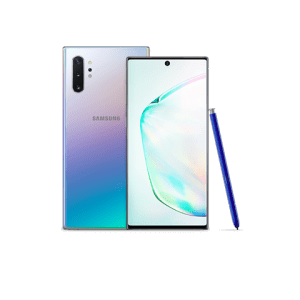
The highlight of this device is the aforementioned S Pen, a stylus
that helps you do loads with your device. It isn’t just used for drawing
and taking notes; a range of gesture controls help you get the most out
of your handset.
Yes, the phone is expensive (prohibitively so, to some), but every
penny you pay goes straight into one of the best Samsung phones about,
and one of the best handsets full stop.
5. Samsung Galaxy Note 10
The second best S Pen option
Release date: August 2019 | Weight: 168g | Dimensions: 151 x 71.8 x
7.9mm | OS: Android 9 | Screen size: 6.3-inch | Resolution: 1080 x 2280 |
CPU: Snapdragon 855 / Exynos 9825 | RAM: 8GB | Storage: 256GB |
Battery: 3,500mAh | Rear camera: 12MP + 12MP + 16MP | Front camera: 10MP
The Samsung Galaxy Note 10 isn’t quite as high on this list as the
Note 10 Plus, and that’s because of a few problems we had with it, like a
battery life that left us wanting more.
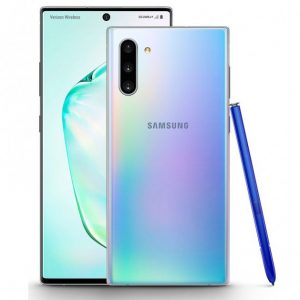
However, the Galaxy Note 10 is still an impressive smartphone, and it’s a lot more affordable than the Note 10 Plus.
So if you’re looking for a great new smartphone that combines
impressive processing power, great video recording hardware, and the S
Pen stylus for note-taking, doodling, and drawing, then the Note 10
could be that handset.
6. Samsung Galaxy S10 Plus
A still-great Samsung flagship
Release date: February 2019 | Weight: 175g | Dimensions: 157.6 x 74.1
x 7.8mm | OS: Android 9 | Screen size: 6.4-inch | Resolution: 1440 x
3040 | CPU: Snapdragon 855 / Exynos 9820 | RAM: 8/12GB | Storage:
128GB/512GB/1TB | Battery: 4,100mAh | Rear camera: 12MP + 12MP + 16MP |
Front camera: 10MP + 8MP
The Samsung Galaxy S10 Plus spent a long time at the top of this list, and with good reason.
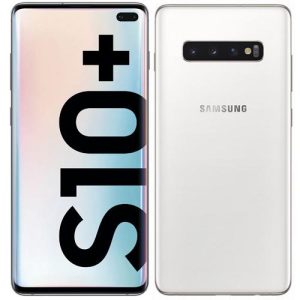
It’s a big upgrade over the previous year’s model, with a newer
all-screen design, enabled by Samsung ditching bezels in favor of a
punch-hole camera. Speaking of the camera, you get three on the back and
two on the front, making this a very versatile camera phone.
The fingerprint scanner is in the screen, which is far more ideal
than it is on the back as was the case with the S9 range, and there’s a
big 4,100mAh battery, which gives the Galaxy S10 Plus a lot of life. So
much so you might even consider using its Wireless PowerShare feature to
juice up other devices with it.
The Galaxy S10 Plus also has a big 6.4-inch screen and all the power you’d expect from a 2019 flagship.
7. Samsung Galaxy S10
Similar to the S10 Plus, but smaller
Release date: February 2019 | Weight: 157g | Dimensions: 149.9 x 70.4
x 7.8mm | OS: Android 9 | Screen size: 6.1-inch | Resolution: 1440 x
3040 | CPU: Snapdragon 855 / Exynos 9820 | RAM: 8GB | Storage:
128GB/512GB | Battery: 3,400mAh | Rear camera: 12MP + 12MP + 16MP |
Front camera: 10MP
Samsung’s Galaxy S10 is largely similar to its plus-sized sibling, just a slight downgrade and slightly more compact.
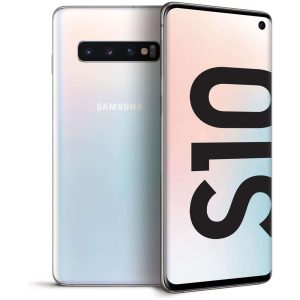
You miss a few features by opting for the S10 over the Plus, but if
you’re looking to save a little money it’s still going to offer the core
highlights, such as that Infinity-O screen, the slick design and
high-end internals.
The fingerprint scanner is also in the screen on the Galaxy S10, plus
it looks gorgeous with an incredible 550 pixels per inch on this model.
You’ve got a variety of color options, plus there’s the choice of
either 128GB or 512GB depending on how much space you’ll need.
The battery life on the standard S10 isn’t as great as it is on the
Plus, but it’s not something to turn your nose up at as it can still
easily survive a full day of use.
8. Samsung Galaxy S10e
A more affordable S10
Release date: March 2019 | Weight: 150g | Dimensions: 142.2 x 69.9 x
7.9mm | OS: Android 9 | Screen size: 5.8-inch | Resolution: 1080 x 2280 |
CPU: Snapdragon 855 / Exynos 9820 | RAM: 6/8GB | Storage: 128/256GB |
Battery: 3,100mAh | Rear camera: 12MP + 16MP | Front camera: 10MP
Fancy an S10 but don’t want to spend lots of money? Samsung has you
covered with its more affordable Galaxy S10e, which is a new addition to
the company’s range of flagship phones for 2019.
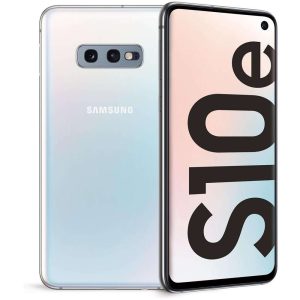
The S10e loses a lot of the top-end features you’ll find on the two
S10 products above in this list such as the in-screen scanner or
high-res display, but it has a slick design for its lower price.
There’s a dual rear camera that can take some impressive shots
considering the price of this handset, plus you’ll be sporting a top-end
chipset inside alongside either 6GB or 8GB of RAM.
Overall, the Galaxy S10e isn’t anywhere near as impressive as the
other two parts of the S10 range, but if you’re not looking to spend
lots of money, this is one of the best Samsung phones for you.
9. Samsung Galaxy Fold
The most forward-thinking phone you shouldn’t purchase
Release date: September 2019 | Weight: 263g | Dimensions: 160.9 x
117.9 x 6.9mm (unfolded) | OS: Android 9 | Screen size: 7.3 and 4.6-inch
| Resolution: 1536 x 2152 and 720 x 1680 | CPU: Snapdragon 855 | RAM:
12GB | Storage: 512GB | Battery: 4,380mAh | Rear camera: 12MP + 12MP +
16MP | Front camera: 10MP + 8MP + 10MP cover camera
The Samsung Galaxy Fold is Samsung’s most ambitious and arguably
exciting handset yet. It’s also the company’s most expensive and
arguably impractical.
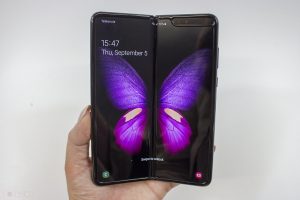
Its 7.3-inch folding screen is sure to wow literally everyone who
sees it, and it means you basically have a phone and tablet all in one.
It also has a pin-sharp resolution, a small secondary display for
when the main screen is closed, and flagship specs, including a high-end
Snapdragon 855 chipset, 12GB of RAM, and six cameras (three on the
back, two on the front, and one on the ‘cover’).
In other words, this is about as flagship as flagships get, as well
as being the best choice at the time of writing if you want a foldable
phone.
But that’s a big if – the screen is even more delicate than most, and
that price tag puts it out of reach for most buyers. The Galaxy Fold is
certainly impressive, which is why it’s on this list, but it’s also
certainly aimed at early adopters with lots of money to burn.
10. Samsung Galaxy A80
Samsung’s best affordable smartphone so far
Release date: May 2019 | Weight: 220g | Dimensions: 165.2 x 76.5 x
9.3mm | OS: Android 9 | Screen size: 6.7-inch | Resolution: 1080 x 2400 |
CPU: Snapdragon 730 | RAM: 8GB | Storage: 128GB | Battery: 3,700mAh |
Rear camera: 48MP, 8MP, ToF 3D camera | Front camera: Same as rear
Samsung’s premium Note and S-series aren’t its only good phones, as
it has the Galaxy A devices that provide toned-down specs at lower
prices. However A phones are also Samsung’s testing grounds for more
novel ideas, and that’s exactly what the Samsung Galaxy A80 is, with its
cameras.
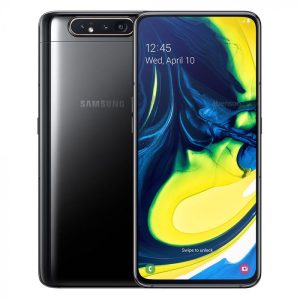
When you want to take a selfie on the Samsung Galaxy A80, which has
no front-facing camera (in order to make way for a full screen with no
complications), a panel housing the device’s rear cameras pops up and
spins around, which is a quirky and fun gimmick.
There’s more to the phone than its cameras though, with a 6.7-inch
AMOLED display and impressive charging speed, making it a decent option
for people who don’t need one of Samsung’s premium devices.
11. Samsung Galaxy A90
5G from Samsung without the price hike
Release date: September 2019 | Weight: 206g | Dimensions: 164.8 x
76.4 x 8.4mm | OS: Android 9.0 | Screen size: 6.7 inches | Resolution:
1080 x 2400 pixels | CPU: Snapdragon 855 | RAM: 6GB/8GB | Storage: 128GB
| Battery: 4500mAh | Rear camera: 48MP f/2.0 + 8MP f/2.2 + 5MP f/2.2 |
Front camera: 32MP f/2.0
The Samsung A90 5G is the cheapest way to get 5G connectivity on a
Samsung phone, and one of the cheapest ways to get 5G connectivity full
stop… sure, it makes some compromises to get to a lower price point (no
waterproofing, no wireless charging), but you might well consider the
trade-offs to be worth it.
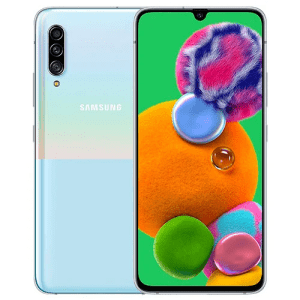
It’s not exactly a budget phone either, but you do get that 5G and a
top-of-the-range Snapdragon 855 processor here for your money. The
6.7-inch screen looks the part too, and the triple-lens camera on the
back is not to have sneezed at either. One of the best mid-range Samsung
phones.
With 5G now appearing in more parts of the country, it might be wise
to make your next smartphone purchase one that’s futureproofed – the
coverage is only going to get better over time, and those download and
upload speeds really have to be seen to be believed.
12. Samsung Galaxy Z Flip
The best Samsung foldable phone
Weight: 183g | Dimensions: 167.3 x 73.6 x 7.2mm | OS: Android
10Screen | size: 6.7 inches | Resolution: 1080 x 2636 pixels | CPU:
Snapdragon 855 Plus | RAM: 8GB | Storage: 256GB | Battery: 3300mAh |
Rear camera: 12MP f/1.8 + 12MP f/2.2 | Front camera: 10MP f/2.4
The Galaxy Z Flip is going to really appeal to some people, and
really put other people off – it all depends what you think of that
foldable hinge in the middle, which makes the Galaxy Z Flip an
innovative phone in 2020 at the very least. It’s still early days for
the handset, so we’re hoping that it stands the test of time and that
the hinge is truly durable.
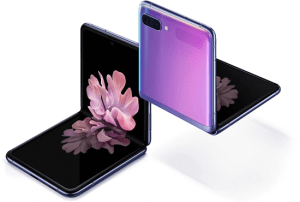
Samsung hasn’t skimped too much on specs here either – the Galaxy Z
Flip comes with the Snapdragon 855 Plus chipset and 8GB of RAM, which
should really be plenty for all the mobile phone tasks you want to do.
It also has a few software tricks up its sleeve, with the ability to
split the screen in half, top to bottom, if needed.
The foldable Galaxy Z Flip is undoubtedly a cool piece of technology,
but is it worth the admittedly high asking price? That all depends on
whether you want something that’s practical or attention-grabbing.
Still, we have to give Samsung high marks for persisting in trying to
make the foldable phone market a viable proposition.